
Tororo District is facing a budget shortfall of more than Shs24 billion after realizing only Shs62.5 billion out of its approved Shs87.3 billion budget for the 2025/2026 financial year, sparking concern over service delivery in key sectors including health, education, water, and infrastructure.
According to district officials, the approved budget had projected Shs81.8 billion from the central government, Shs2.5 billion from external financing and donor support, and Shs2.7 billion from locally generated revenue.
Out of the approved budget, Shs3.4 billion had been allocated to agro-industrialization, Shs2 billion to infrastructure and transport services, Shs61.7 billion to human capital development, and Shs18.6 billion to governance and security, among other priorities.
District Chief Finance Officer Isaac Muwagunzi said the largest share of the budget was directed toward sectors that directly affect livelihoods and social services.
“This focuses on overall management and administration of the district. Under human capital is where sectors like health and education are catered for,” Muwagunzi explained.
However, despite the district’s ambitious projections, only Shs62.5 billion was eventually realized, leaving a funding gap of more than Shs24 billion.
District officials attributed the deficit to poor performance in key revenue streams. External financing, which had been projected at Shs2.5 billion, only realized Shs626 million, while local revenue collections stood at Shs1.8 billion against a target of Shs2.7 billion.
Authorities partly blamed political interference for undermining local revenue collection efforts, while declining donor support was linked to shifting global political and economic dynamics.
“We experienced political interference, which affected compliance in local revenue collection,” Muwagunzi said.
Connie Bwire said the reduction in donor funding had significantly affected healthcare delivery within the district.
“The Trump wave which came and swept majority of partners. Partners support us a lot in equipping our health facilities, helping us in maternal health services and buying delivery beds,” Bwire noted.
District leaders say the budget shortfall has heavily affected critical sectors such as health, education, water, and road infrastructure.
Out of the planned 15 boreholes intended to improve access to clean water, the district only managed to drill three, leaving many communities struggling to access safe water sources.
District Chairperson John Okea said residents, particularly women, continue to face hardships due to limited access to clean water.
“My people are suffering, especially women. You get them trekking for long distances to get water,” Okea said.
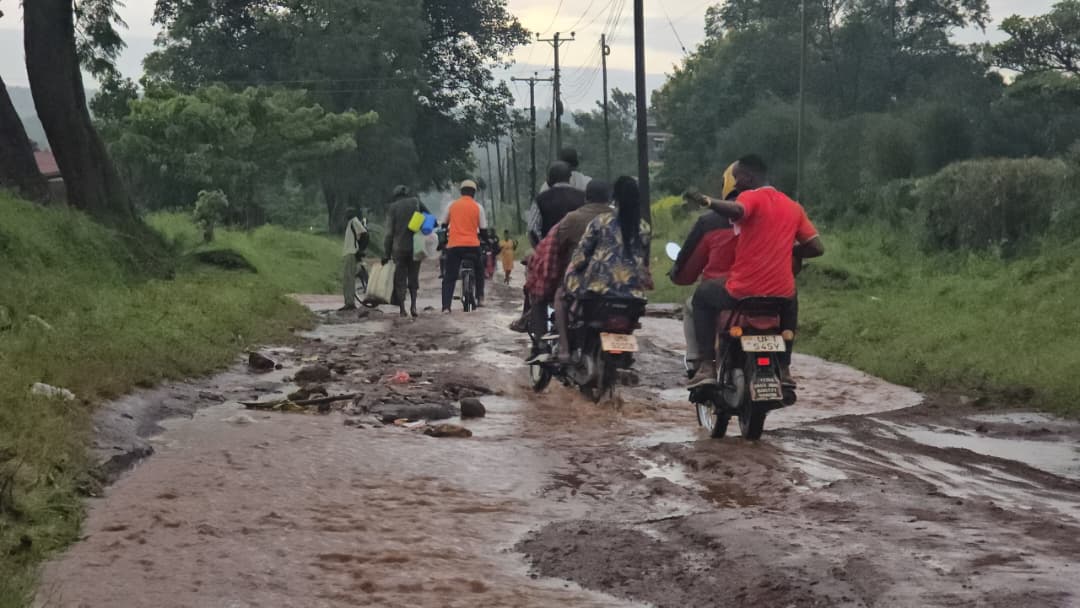
Road infrastructure has also been adversely affected, with ongoing rains leaving several community access roads nearly impassable, disrupting transport, trade, and access to public services.
Despite the financial difficulties, district leaders say some progress has still been registered across various sectors.
According to Okea, some health facilities have been upgraded with staff quarters and sanitation facilities, while schools have benefited from construction of classroom blocks and procurement of desks.
“We managed to construct over 14 pit latrines in schools, constructed several classroom blocks and upgraded Health Centre IIs to Health Centre IIIs,” Okea added.
However, concerns persist over delayed completion of several government-funded projects, with some contractors accused of abandoning works despite reportedly receiving full payments.
Deputy Resident District Commissioner Albert Amula said some of the stalled projects had been awarded to the UPDF Engineering Brigade.
“Most of these stalled projects are projects awarded to the UPDF Army Brigade. So we are going to inquire about what exactly is going on with them because we normally pay them in advance,” Amula said.
He explained that several projects are implemented in phases and become vulnerable whenever funding disruptions occur.
“Some of these projects stalled are worked on in a phased manner, so if we get short of funds, the district cannot do much,” he added.
District leaders also disclosed that despite the funding constraints, the district has struggled to fully absorb the funds already released, raising the possibility that some unspent money could be returned to the national treasury at the close of the financial year.
According to Okea, part of the unspent funds relates to delays in processing salaries for secondary school teachers recently transferred into the district.
“This mainly involves wages for secondary teachers. Some of the teachers were transferred from elsewhere and clearing them to begin receiving salaries has taken a bit long,” he explained.
With growing demand for public services and declining revenues, Tororo District leaders now face mounting pressure to balance community expectations against limited financial resources as the financial year draws closer to an end.
